
Blog series
AI Engineering.
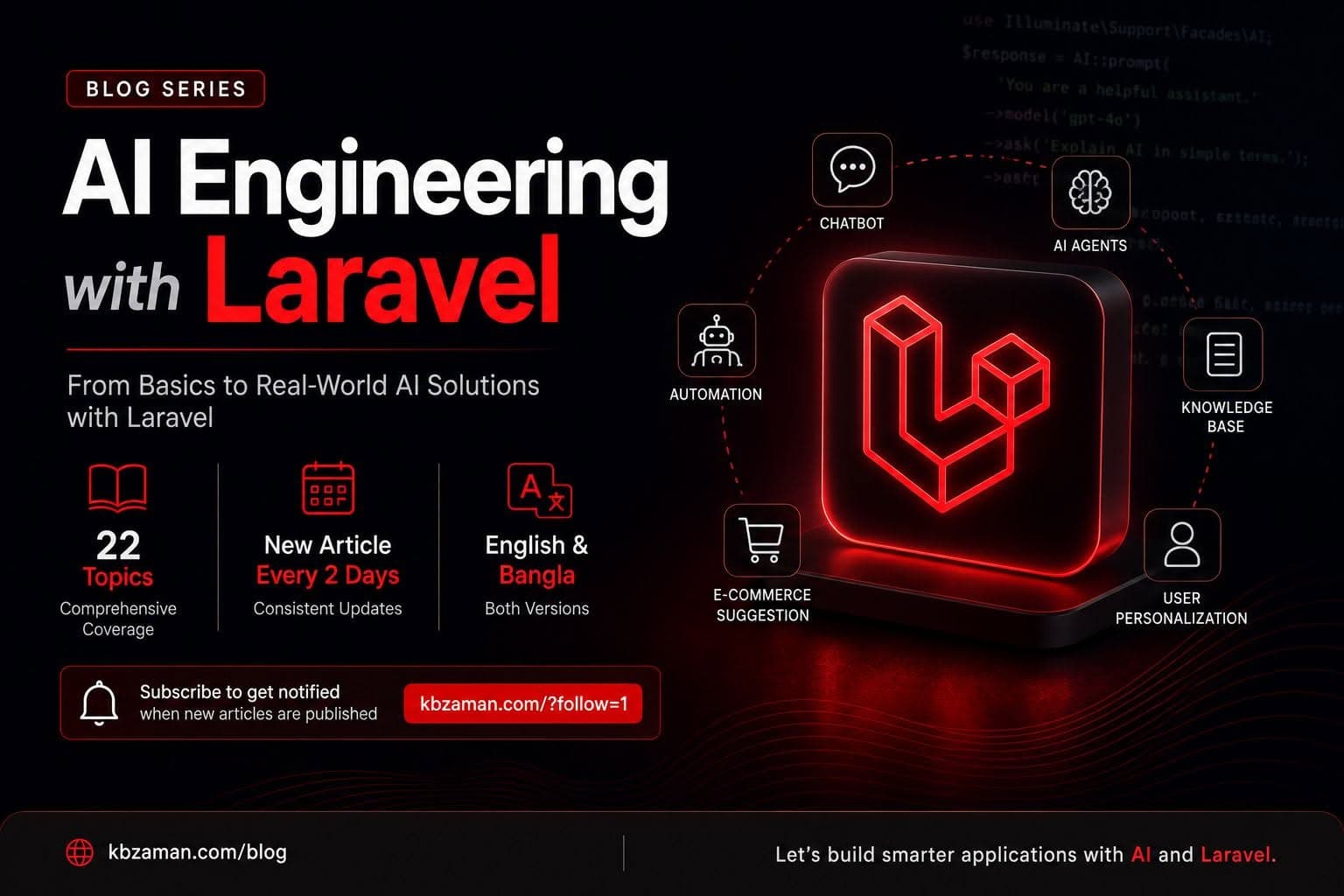
A chapter-by-chapter guide to building production AI features with Laravel: the SDK, agents, prompts, structured output, reliability, model costs, RAG, MCP, streaming, security and observability.
About the series
What this series is about.
AI engineering means using an existing AI model to add useful features to a real software application, and then making the whole feature reliable. This series approaches that from the Laravel side: the model is one component, and the application still owns authorization, validation, persistence and the final business decision.
The chapters build on each other. The fundamentals article sets the vocabulary and a first architecture; later chapters go deeper into the Laravel AI SDK, agents and tool calling, prompt and structured-output contracts, reliability and multi-provider design, token economics, retrieval-augmented generation and vector search, the Model Context Protocol, and the production concerns of streaming, security, observability and performance.
Chapters
 Chapter 01
The Fundamentals of AI Engineering
A practical guide to AI engineering for Laravel developers: core concepts, architecture, tools, RAG, reliability, security, and the boundaries that keep production systems safe.
 Chapter 02
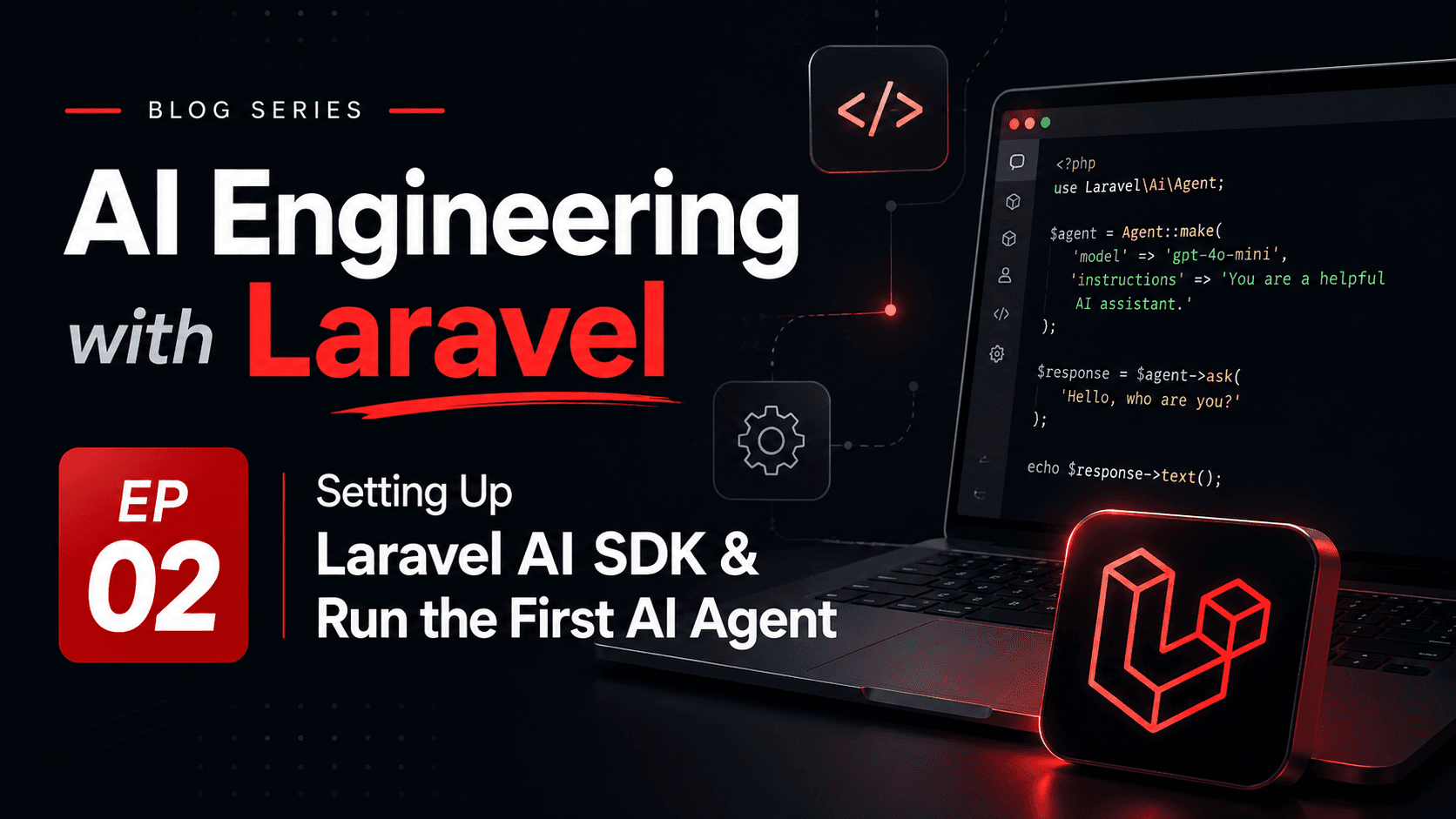
Getting Started with the Laravel AI SDK
A practical Laravel AI SDK introduction for Laravel developers: installation, provider configuration, first agent, prompt flow, usage tracking, and the production boundaries that matter from day one.
 Chapter 03
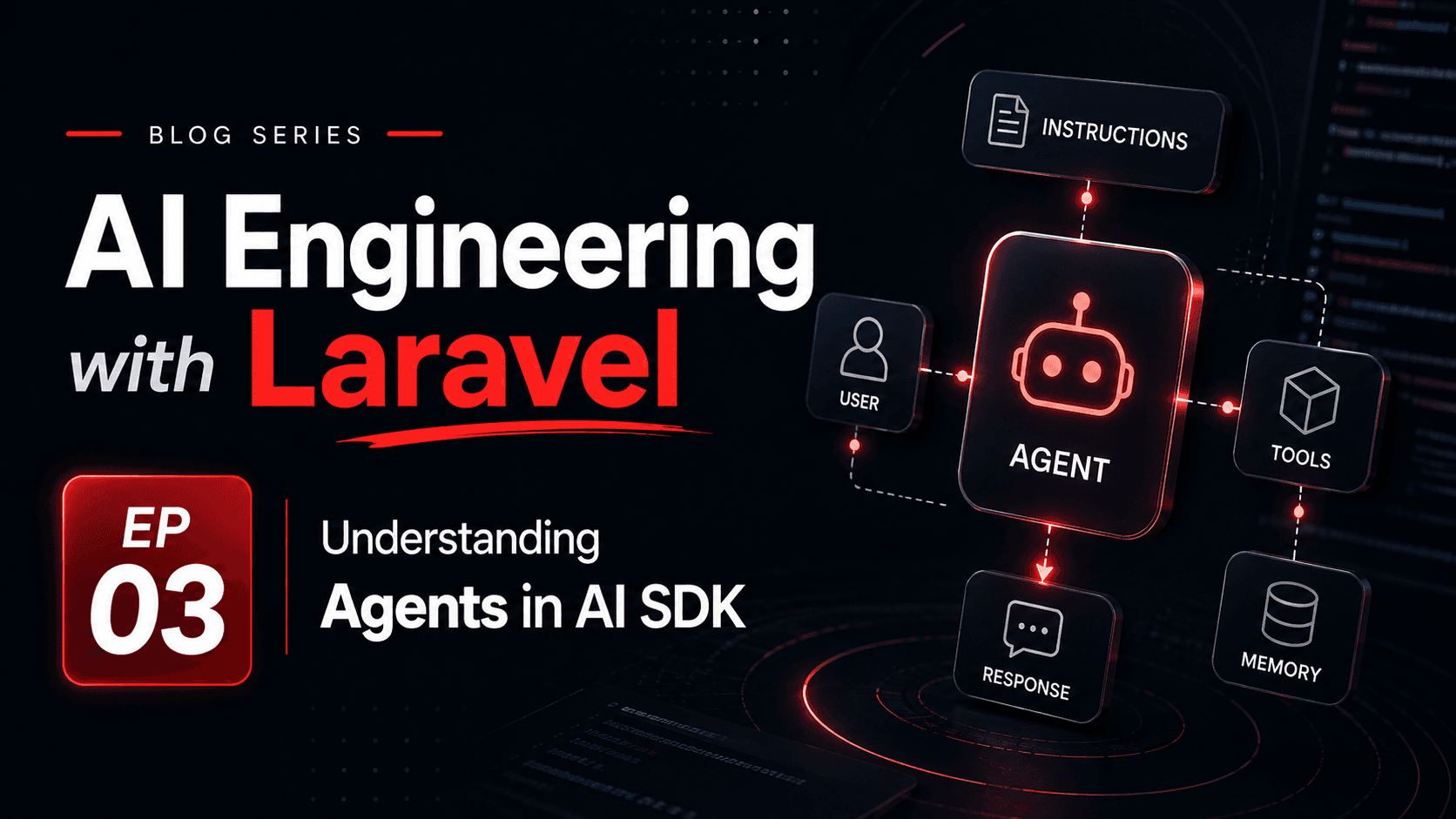
Understanding Agents in the Laravel AI SDK
A practical guide to Laravel AI SDK agents: instructions, context, tools, structured output, execution steps, and the production boundaries Laravel must keep around agent behavior.
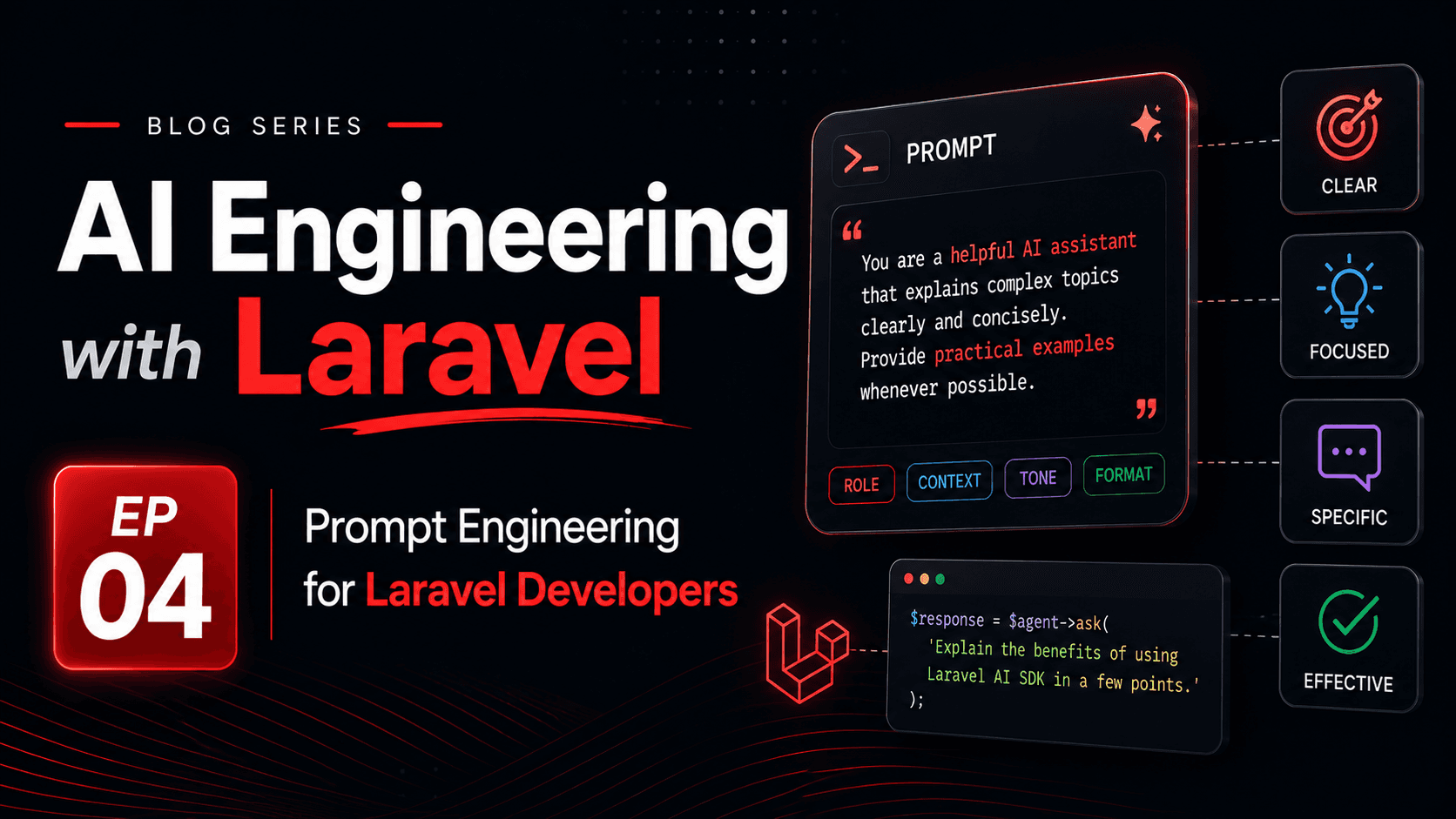 Chapter 04
Prompt Engineering in Laravel Applications
A practical guide to prompt engineering in Laravel applications: instructions, context, constraints, examples, prompt versioning, validation, and safe application boundaries.
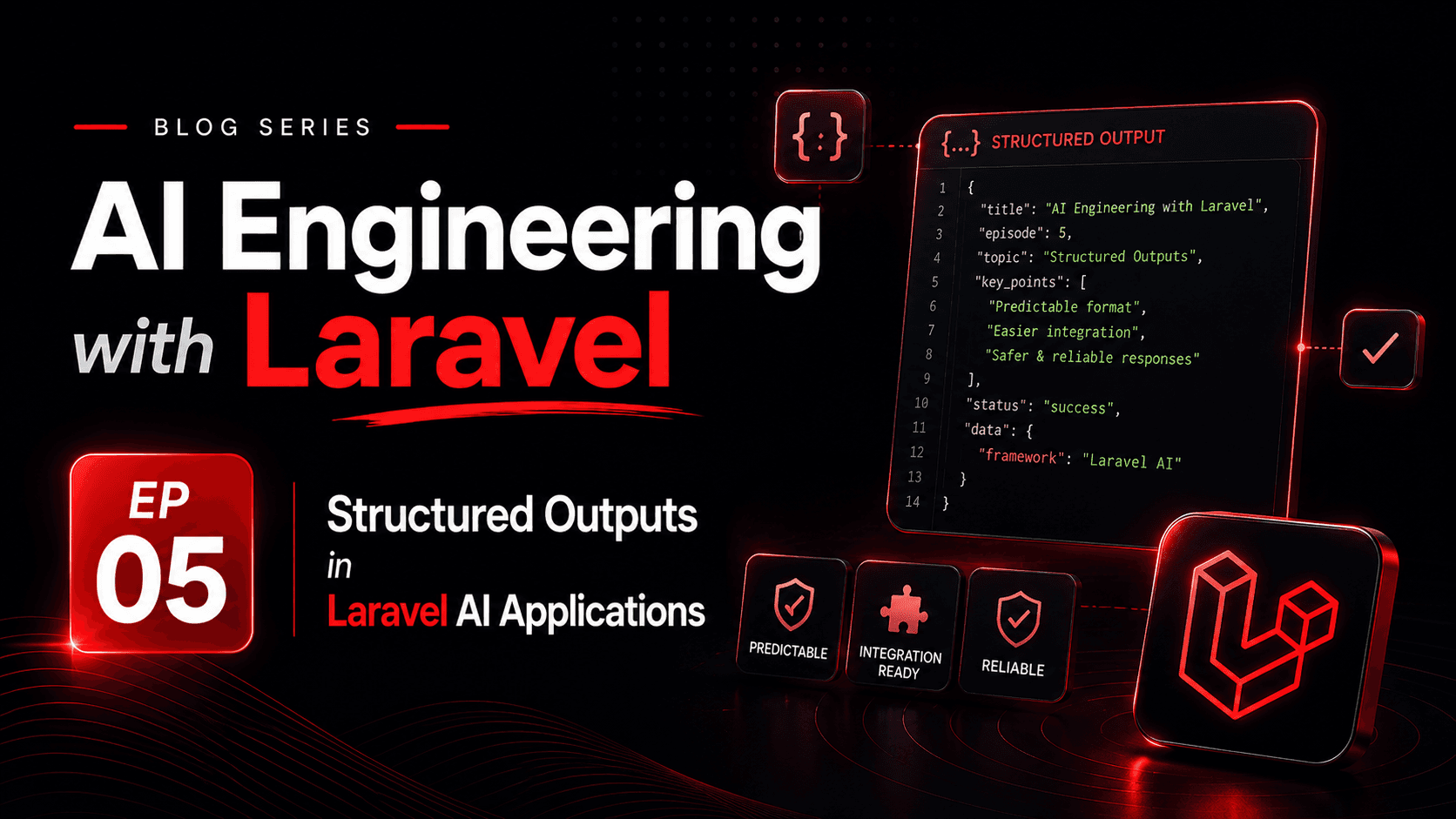 Chapter 05
Structured Outputs in Laravel AI Applications
Build reliable structured outputs in Laravel AI applications using schemas, validation, parsing, and predictable response formats.
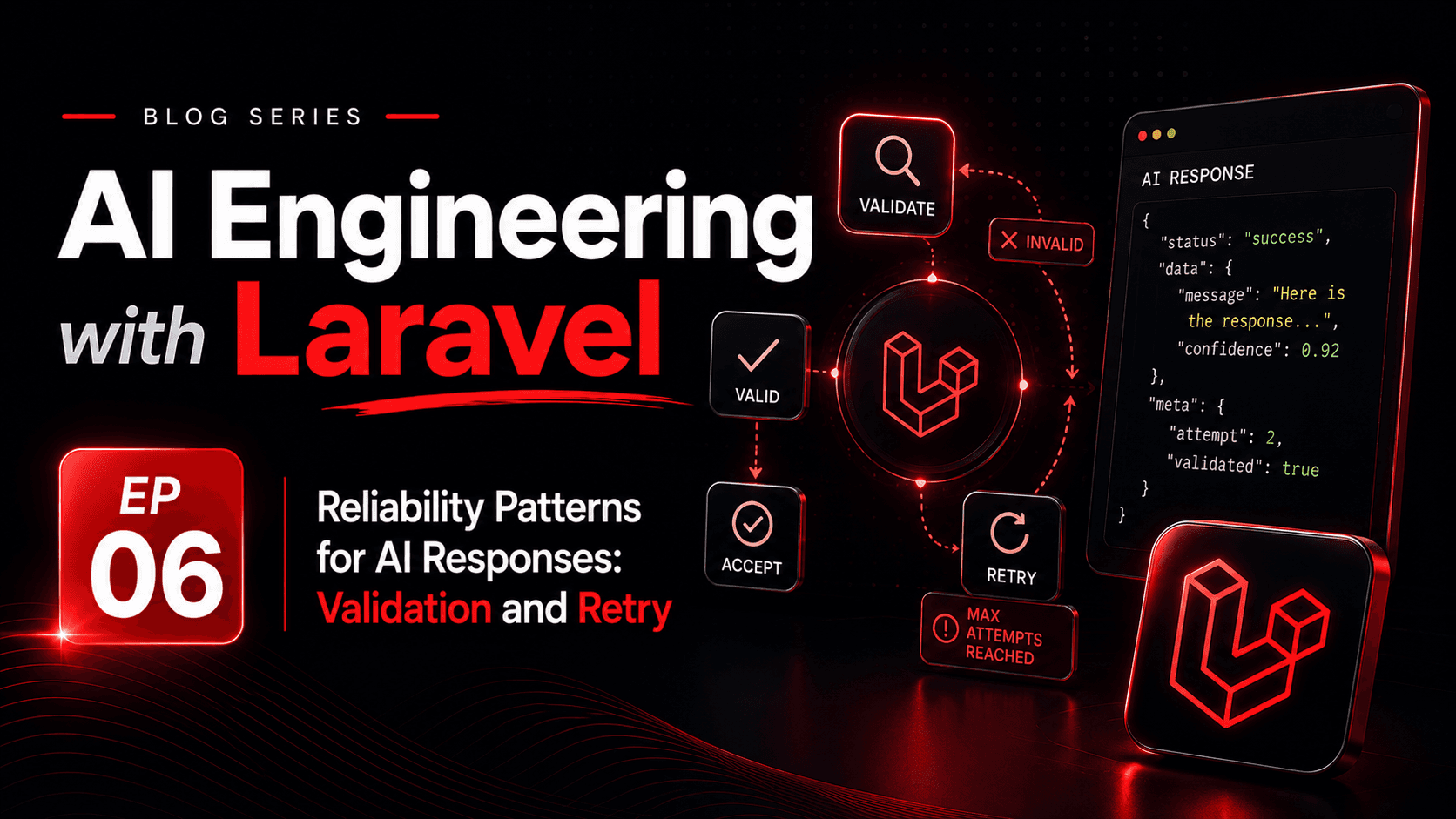 Chapter 06
Reliability Patterns for AI Responses: Validation and Retry
Design validation and retry patterns that make AI responses more dependable in production Laravel applications.
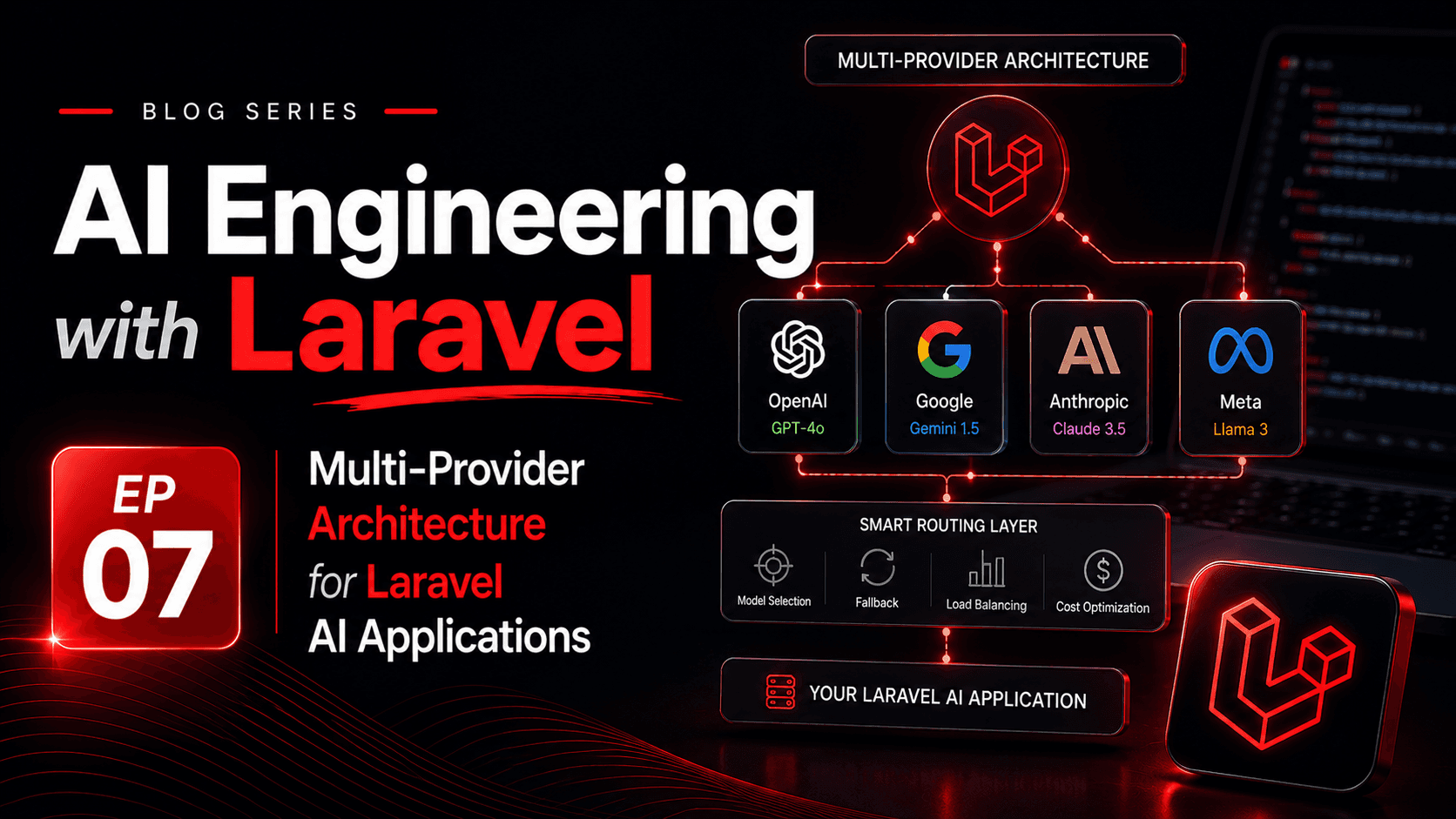 Chapter 07
Multi-Provider Architecture for Laravel AI Applications
Plan a multi-provider Laravel AI architecture that can switch models, reduce vendor lock-in, and improve reliability across AI services.
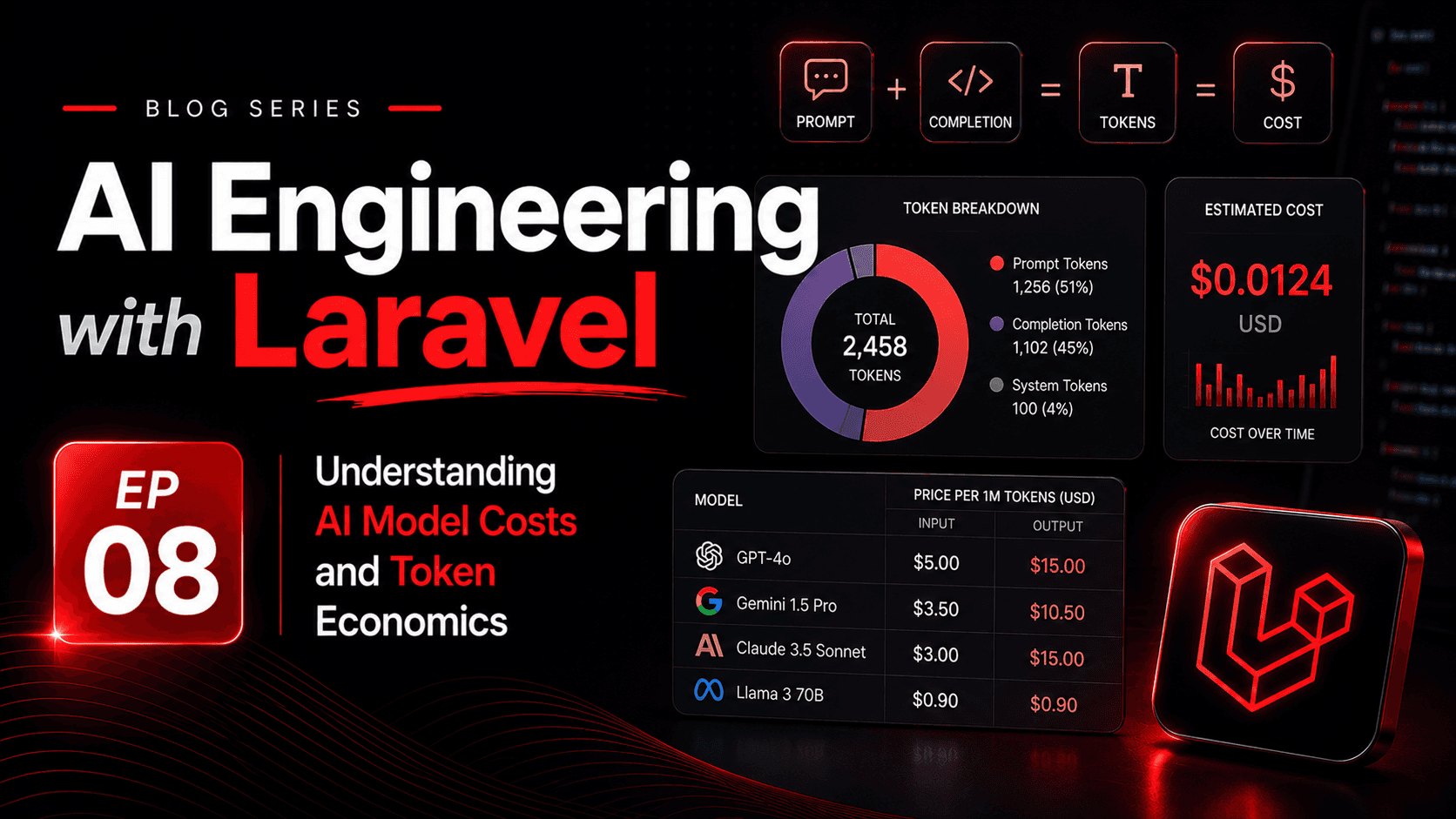 Chapter 08
Understanding AI Model Costs and Token Economics
Understand AI model pricing, token usage, context windows, and cost drivers before shipping AI features in Laravel applications.
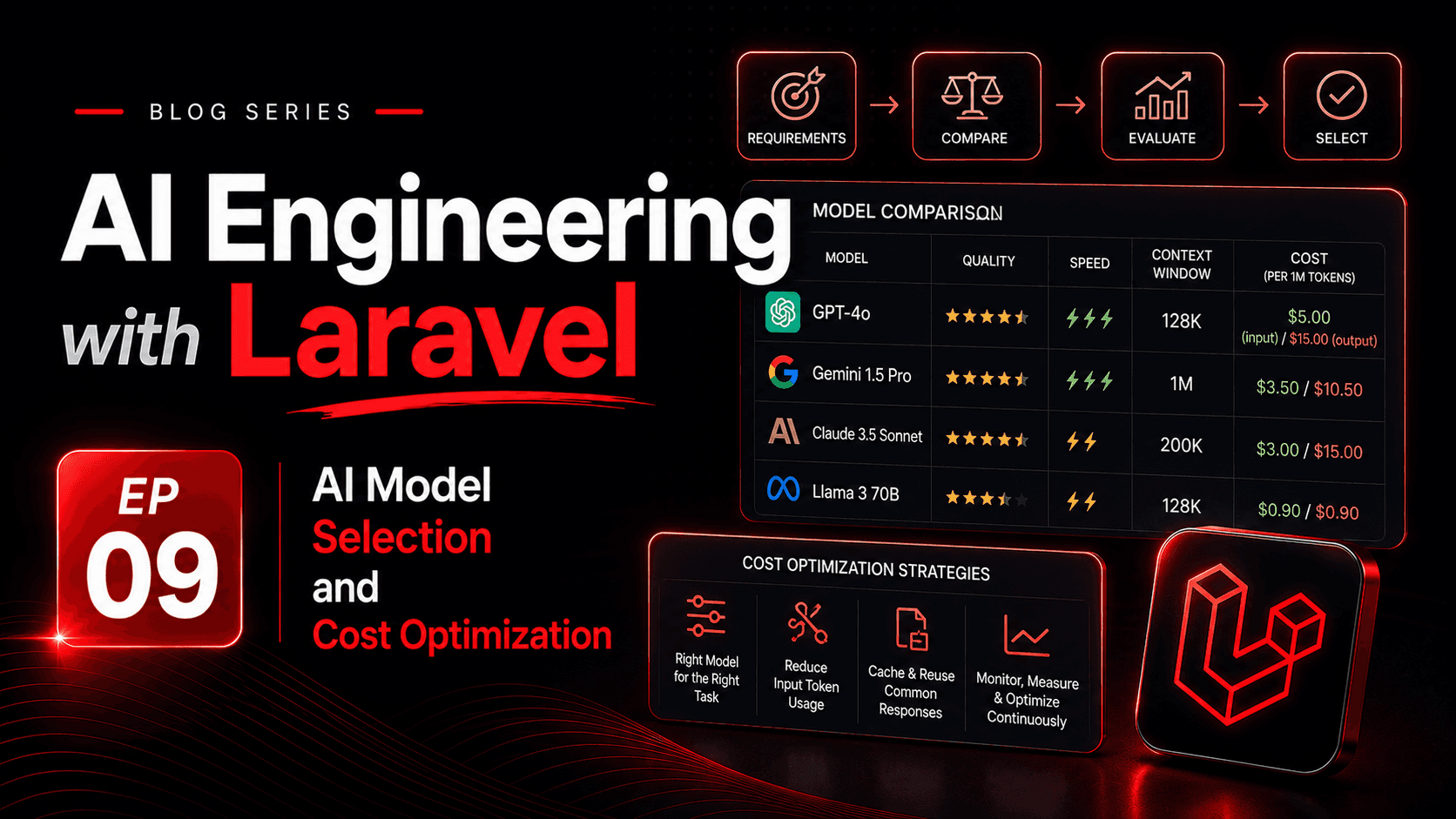 Chapter 09
AI Model Selection and Cost Optimization
Choose the right AI models for Laravel workloads by balancing quality, latency, context length, reliability, and cost.
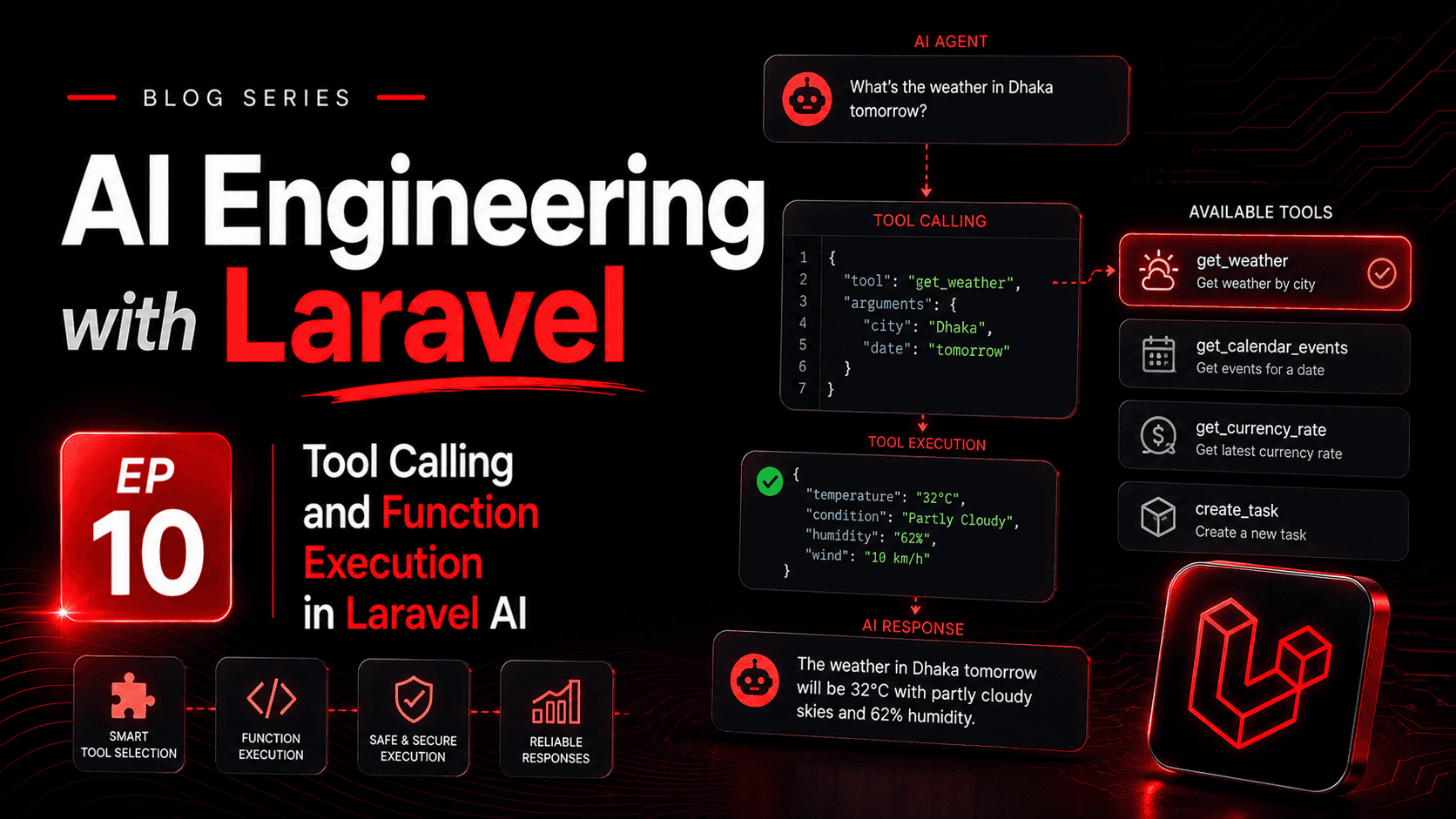 Chapter 10
Tool Calling and Function Execution in Laravel AI
Use tool calling and function execution to let Laravel AI applications safely interact with APIs, databases, and product workflows.
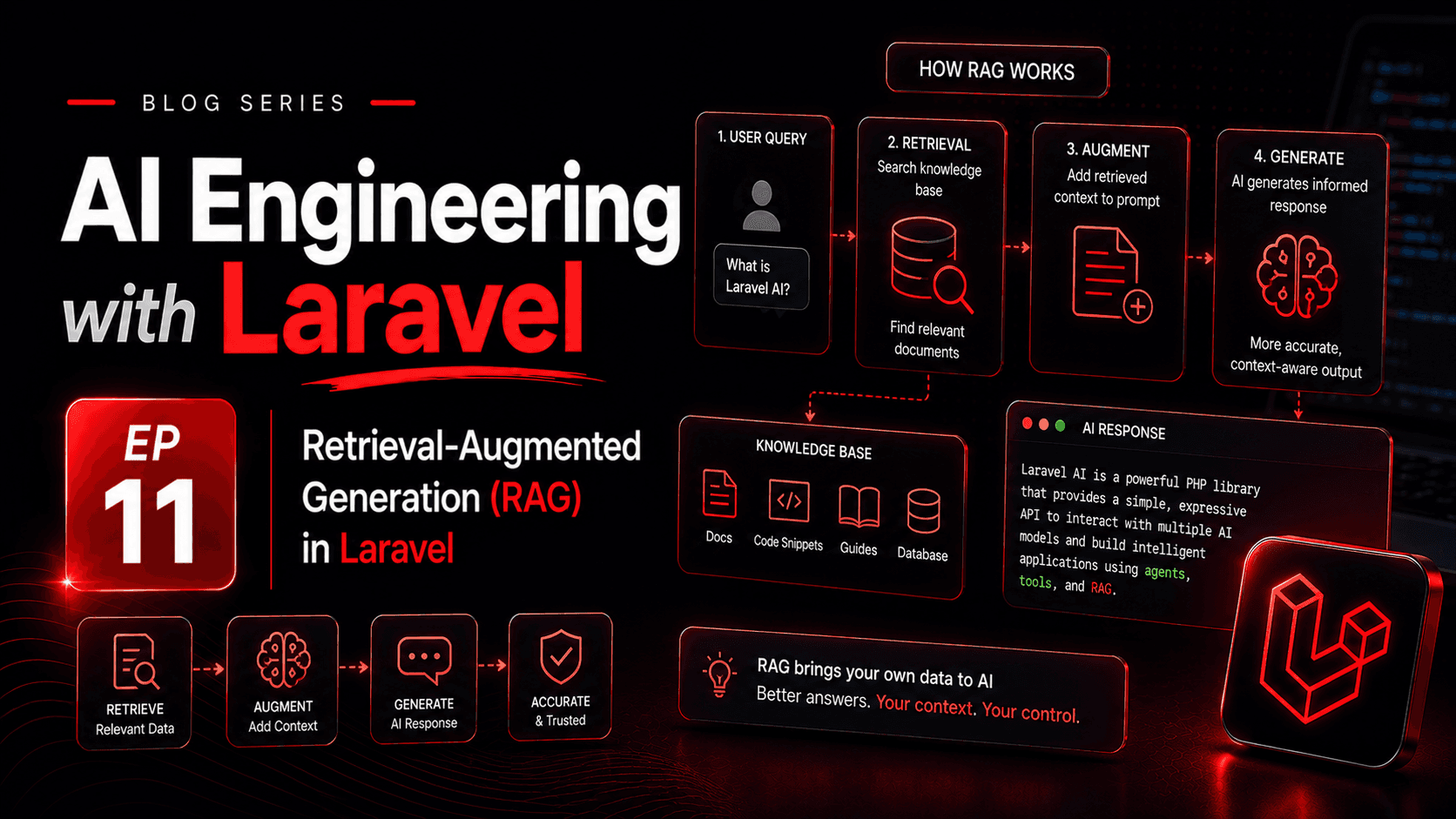 Chapter 11
Retrieval-Augmented Generation (RAG) in Laravel
Learn how retrieval-augmented generation works in Laravel and how to ground AI answers with trusted application data.
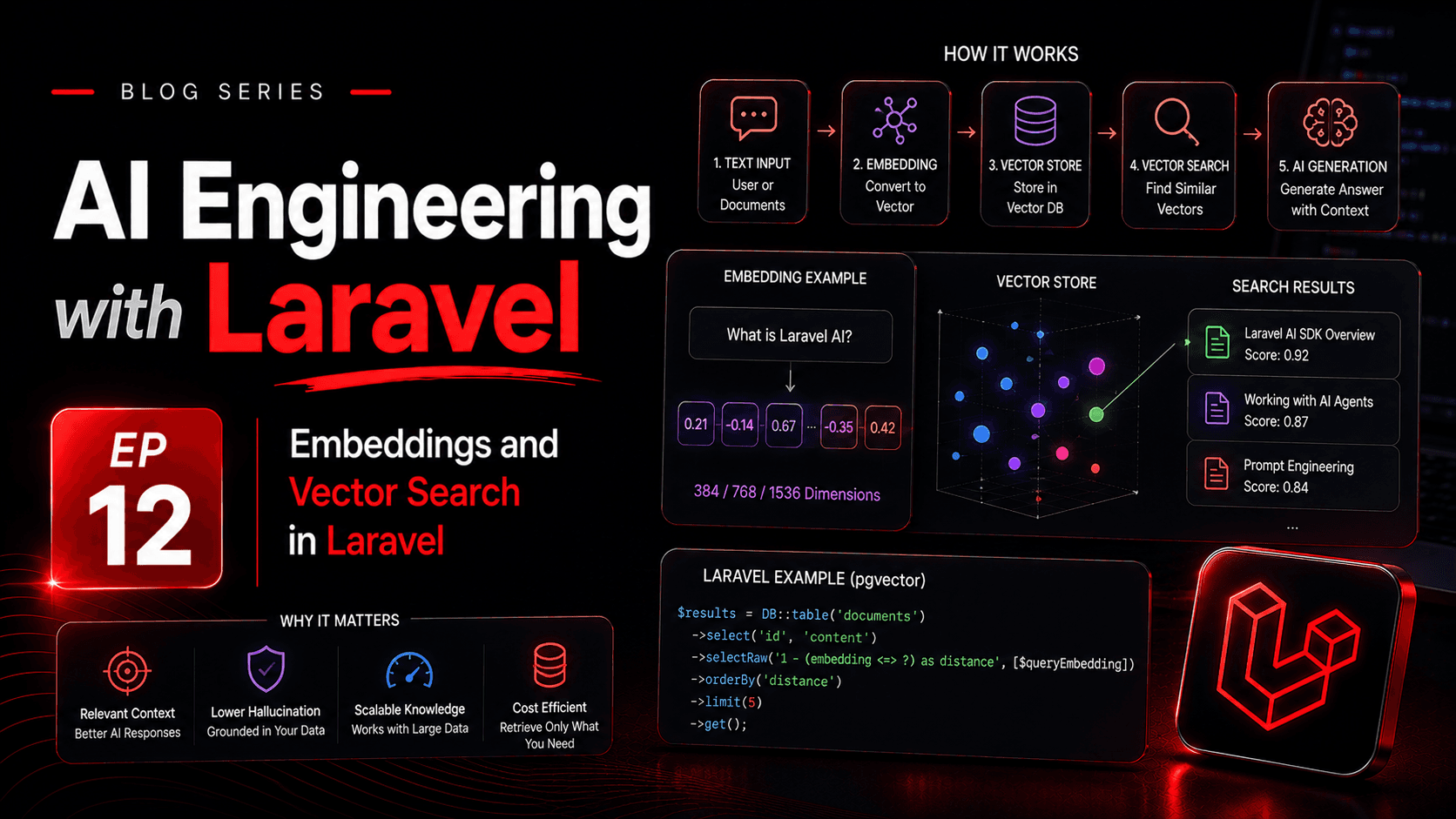 Chapter 12
Embeddings and Vector Search in Laravel
Understand embeddings and vector search for Laravel applications, including indexing, similarity search, and semantic retrieval patterns.
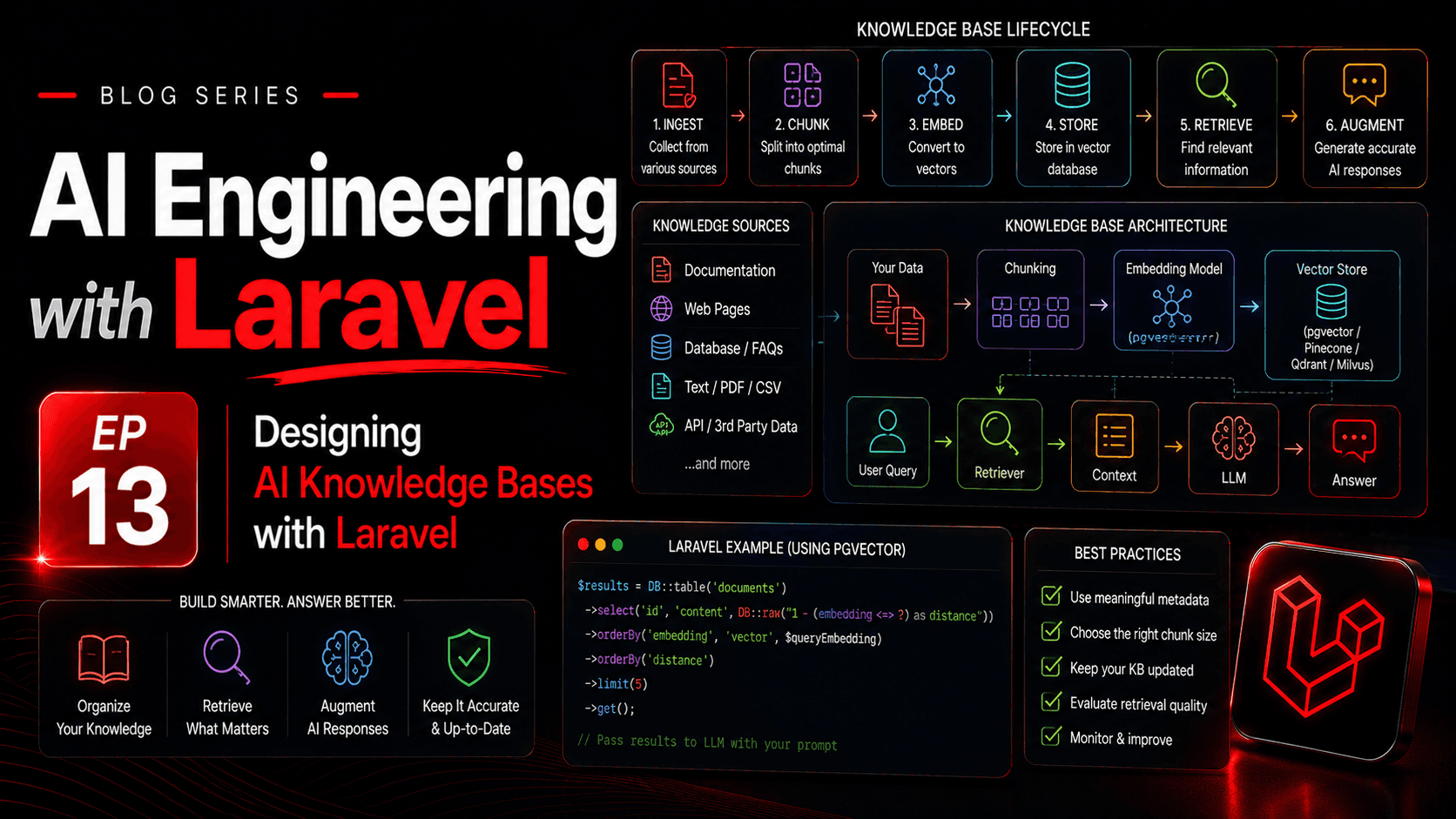 Chapter 13
Designing AI Knowledge Bases with Laravel
Design AI knowledge bases in Laravel that keep content structured, searchable, maintainable, and ready for retrieval-augmented generation.
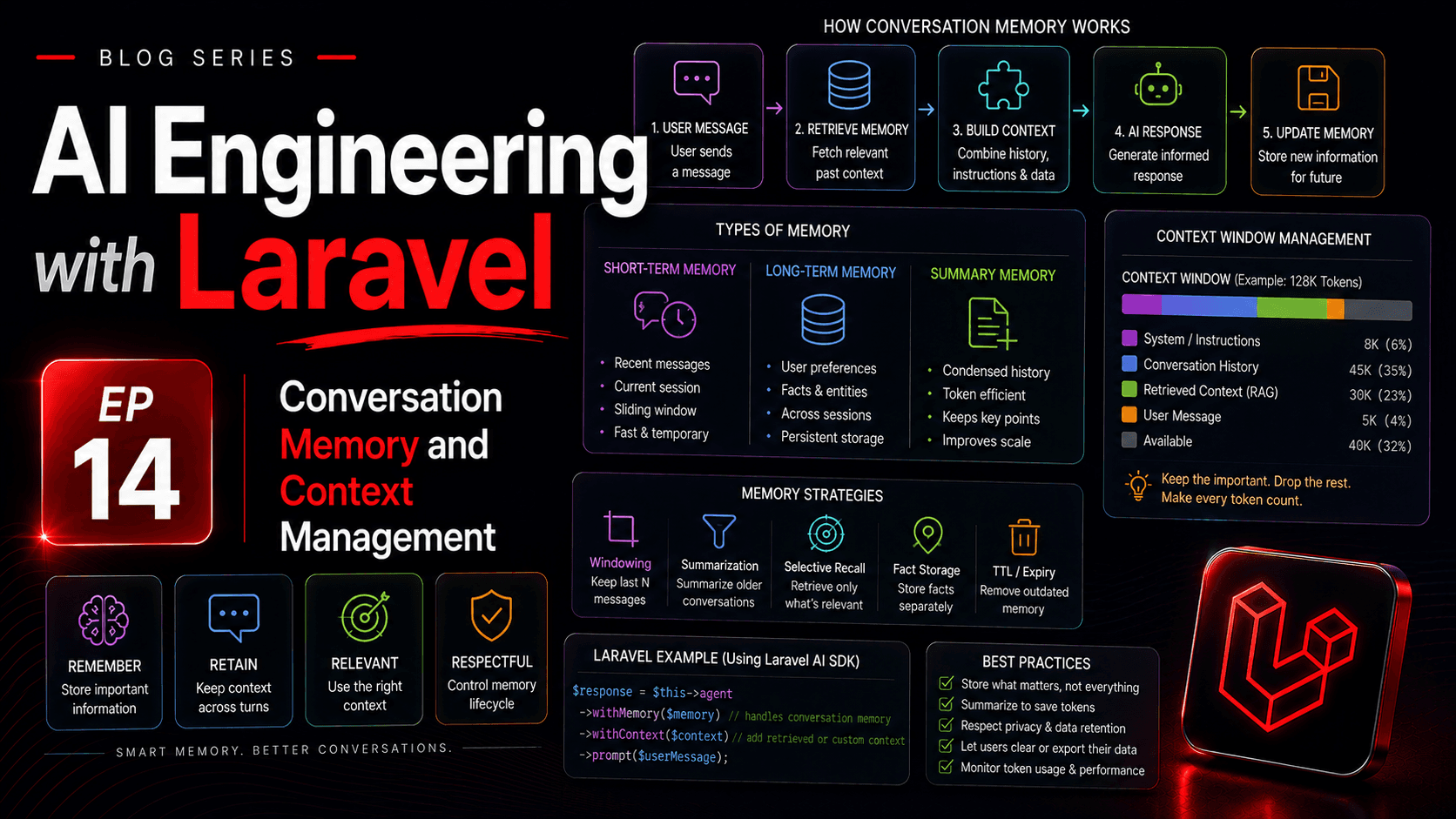 Chapter 14
Conversation Memory and Context Management
Manage conversation memory and context in AI applications without losing control of cost, privacy, relevance, or response quality.
 Chapter 15
Understanding the Model Context Protocol (MCP)
Understand the Model Context Protocol, why MCP matters, and how it standardizes tool and context access for AI applications.
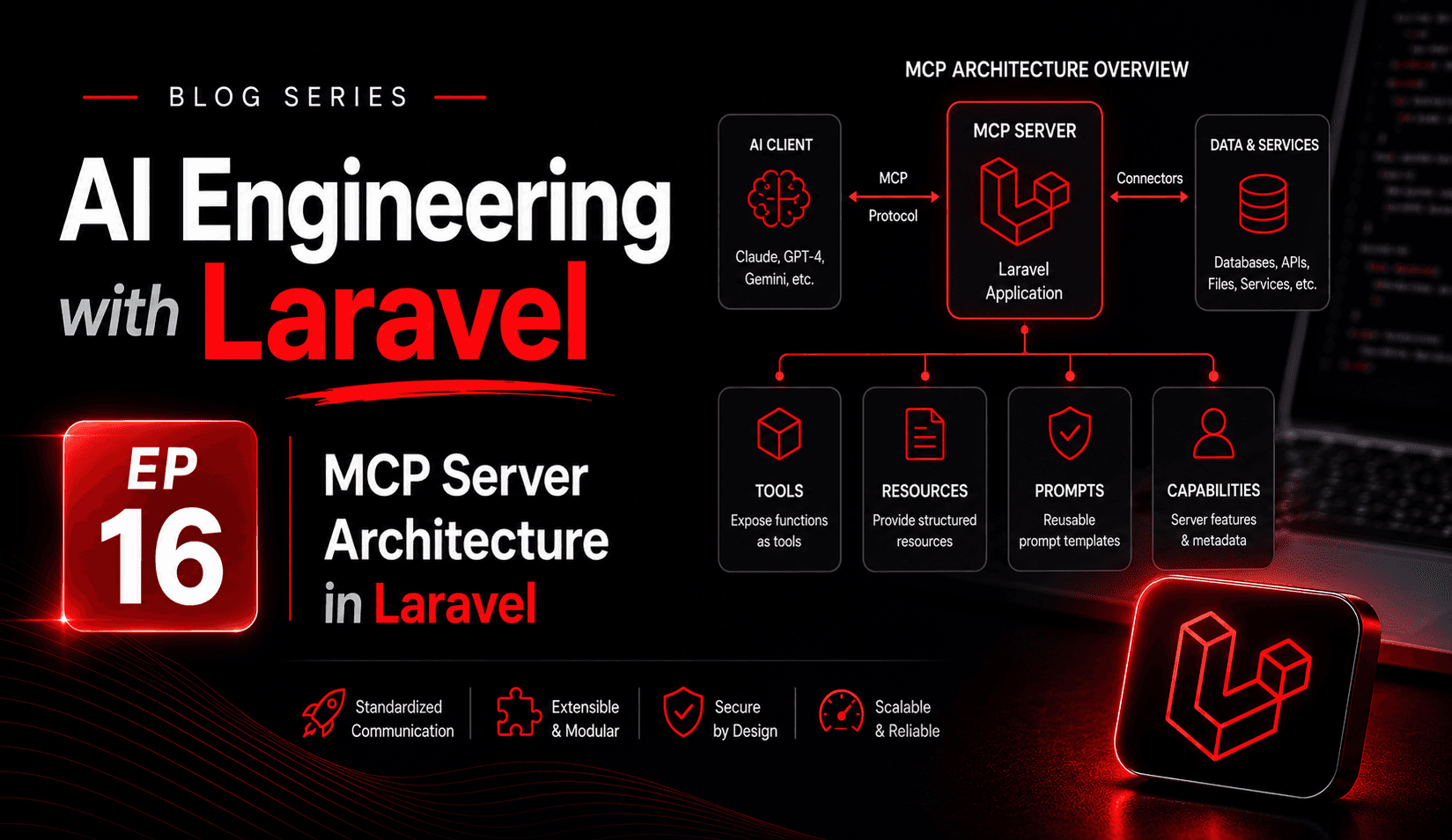 Chapter 16
MCP Server Architecture in Laravel
Explore MCP server architecture in Laravel, including transports, tools, resources, prompts, authentication, and lifecycle design.
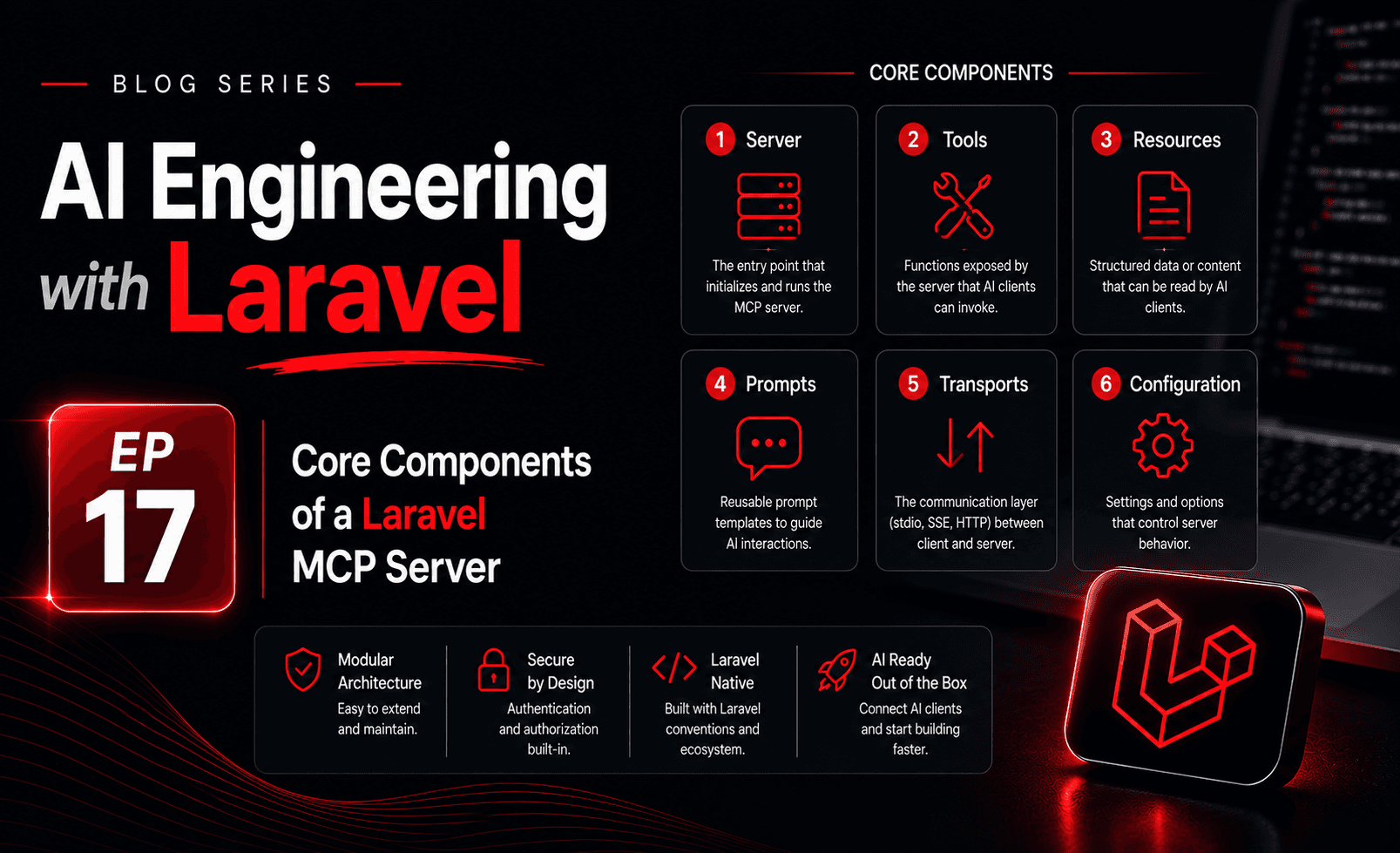 Chapter 17
Core Components of a Laravel MCP Server
Learn the core building blocks of a Laravel MCP server and how tools, resources, schemas, and handlers fit together.
 Chapter 18
Designing a Production-Ready MCP Server with Laravel
Design a production-ready MCP server with Laravel using authentication, validation, logging, error handling, and deployment patterns.
 Chapter 19
Streaming AI Responses in Laravel Applications
Implement streaming AI responses in Laravel applications to improve perceived speed and create responsive user experiences.
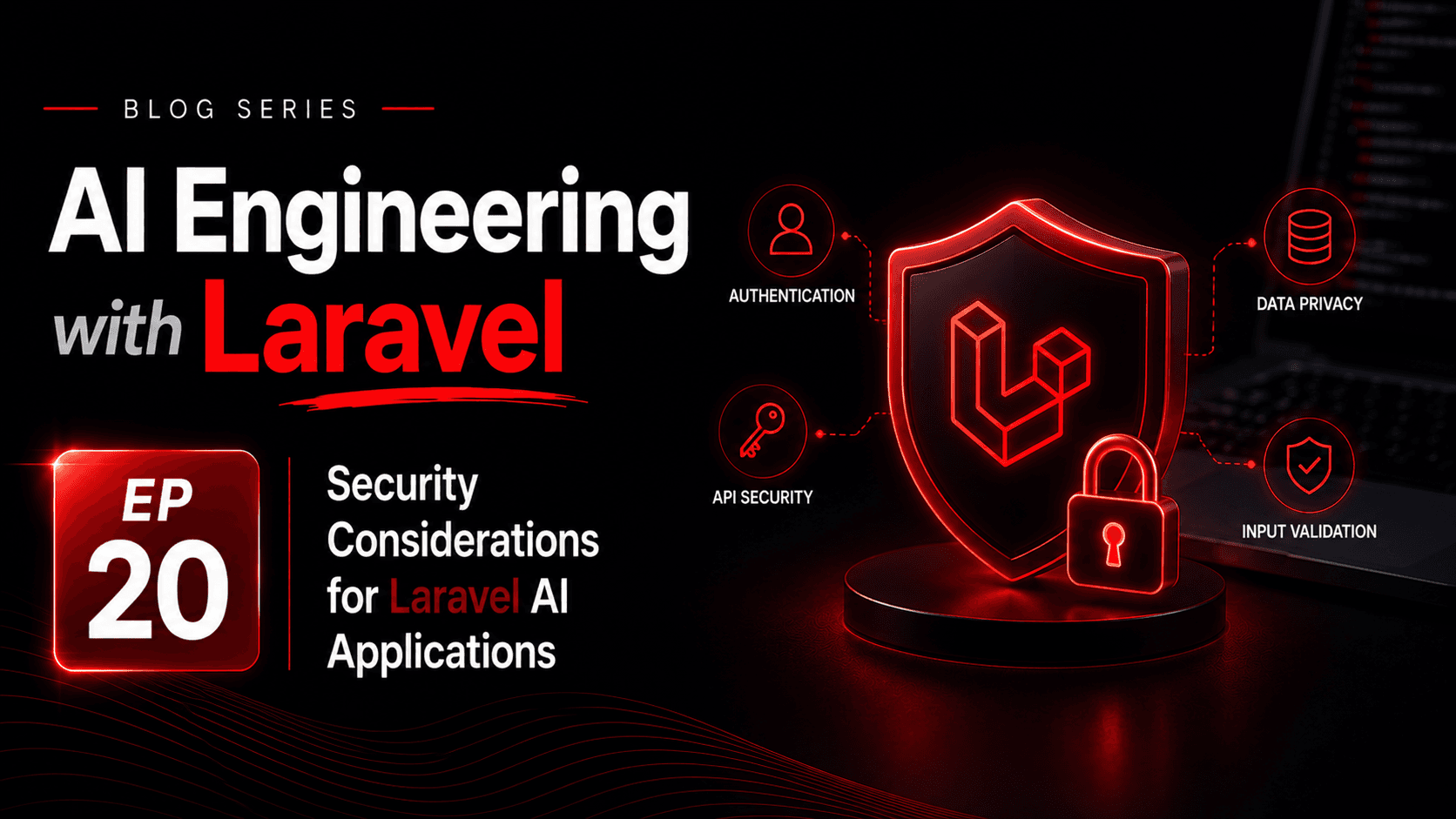 Chapter 20
Security Considerations for Laravel AI Applications
Review security considerations for Laravel AI applications, including prompt injection, tool permissions, data exposure, and audit trails.
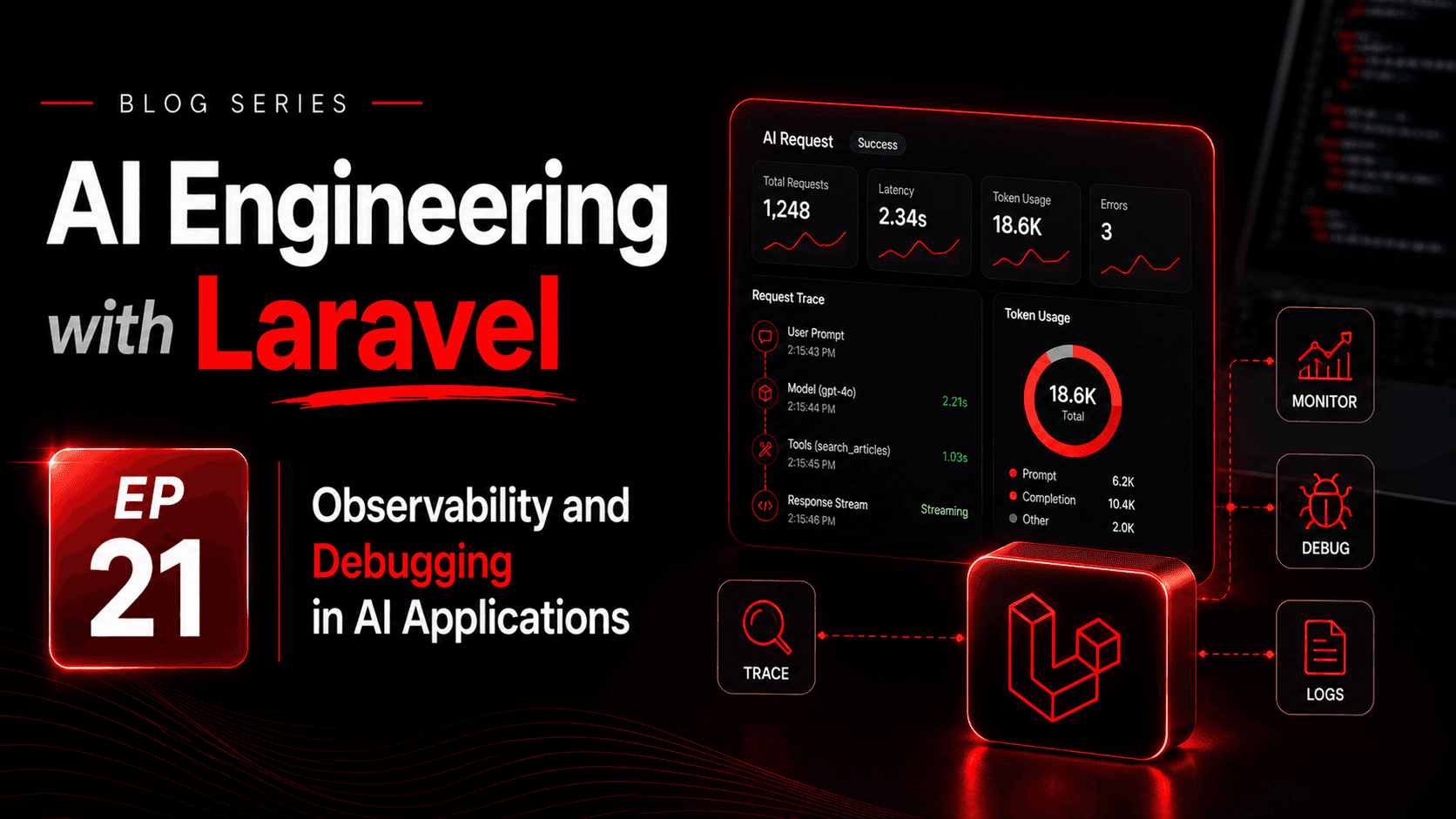 Chapter 21
Observability and Debugging in AI Applications
Add observability and debugging to AI applications with logs, traces, evaluations, token tracking, and failure analysis.
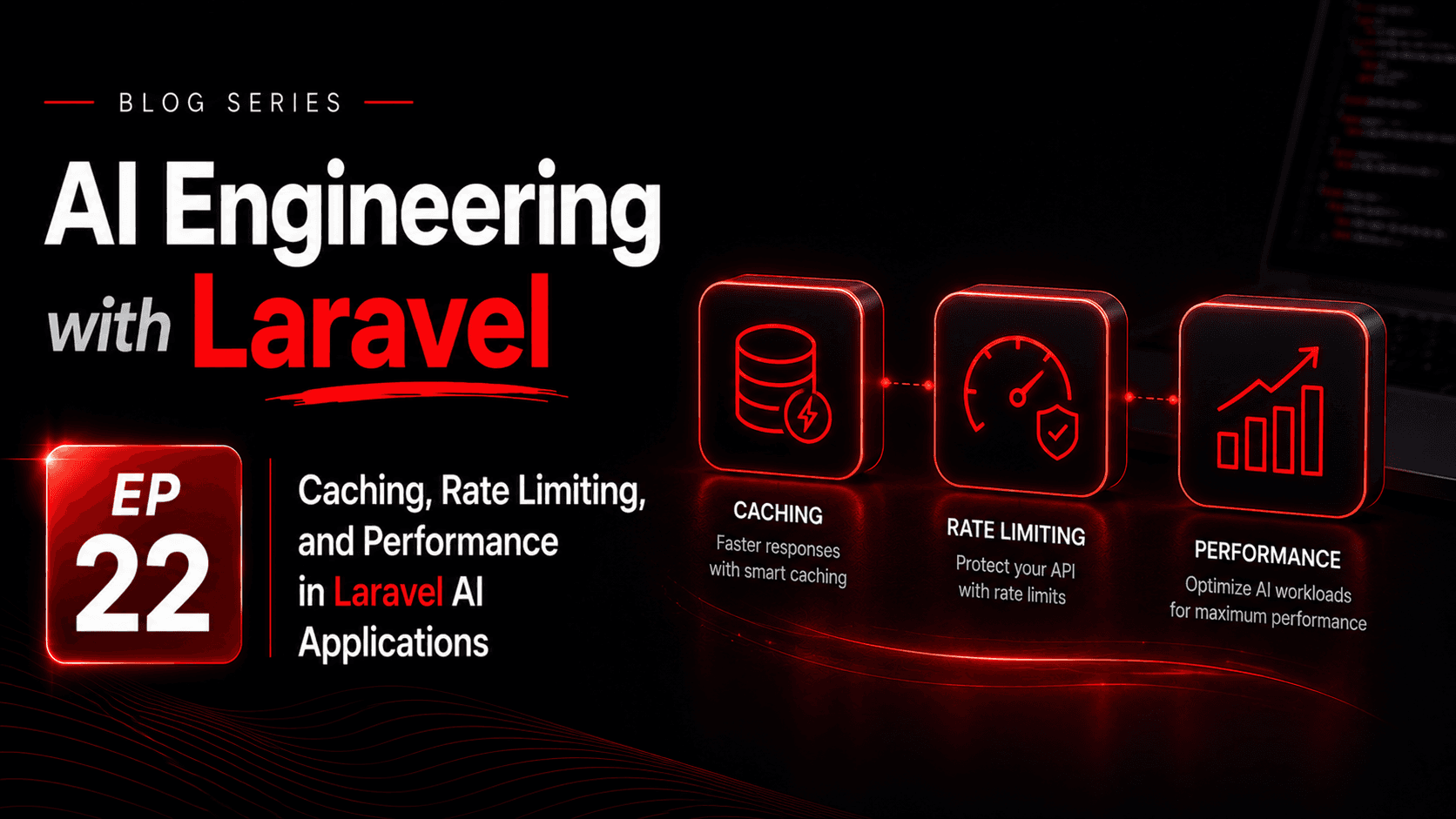 Chapter 22
Caching, Rate Limiting, and Performance in Laravel AI Applications
Improve Laravel AI application performance with caching, rate limiting, queue design, response reuse, and provider-aware throttling.
Questions
About the AI Engineering series
- What does the AI Engineering series cover?
- It covers how to add AI features to Laravel applications in production: the Laravel AI SDK, agents, prompt engineering, structured outputs, validation and retry patterns, multi-provider architecture, model costs and selection, tool calling, RAG, embeddings and vector search, conversation memory, the Model Context Protocol and MCP servers, streaming, security, observability, and caching and rate limiting.
- Who is the series written for?
- Laravel and PHP developers who want to ship AI-powered features without training models themselves. It assumes working knowledge of Laravel and explains the AI concepts as they come up.
- Where should I start?
- Start with The Fundamentals of AI Engineering. It introduces the core terms (LLM, provider, model, prompt, agent, tool, RAG, MCP) and a first production architecture that the rest of the series builds on. After that, the chapters can be read in order or by topic.
New chapters in progress
Get notified when the next chapter is published.
4 of 22 chapters are live. Leave your email and I will let you know as the rest of the series goes out.